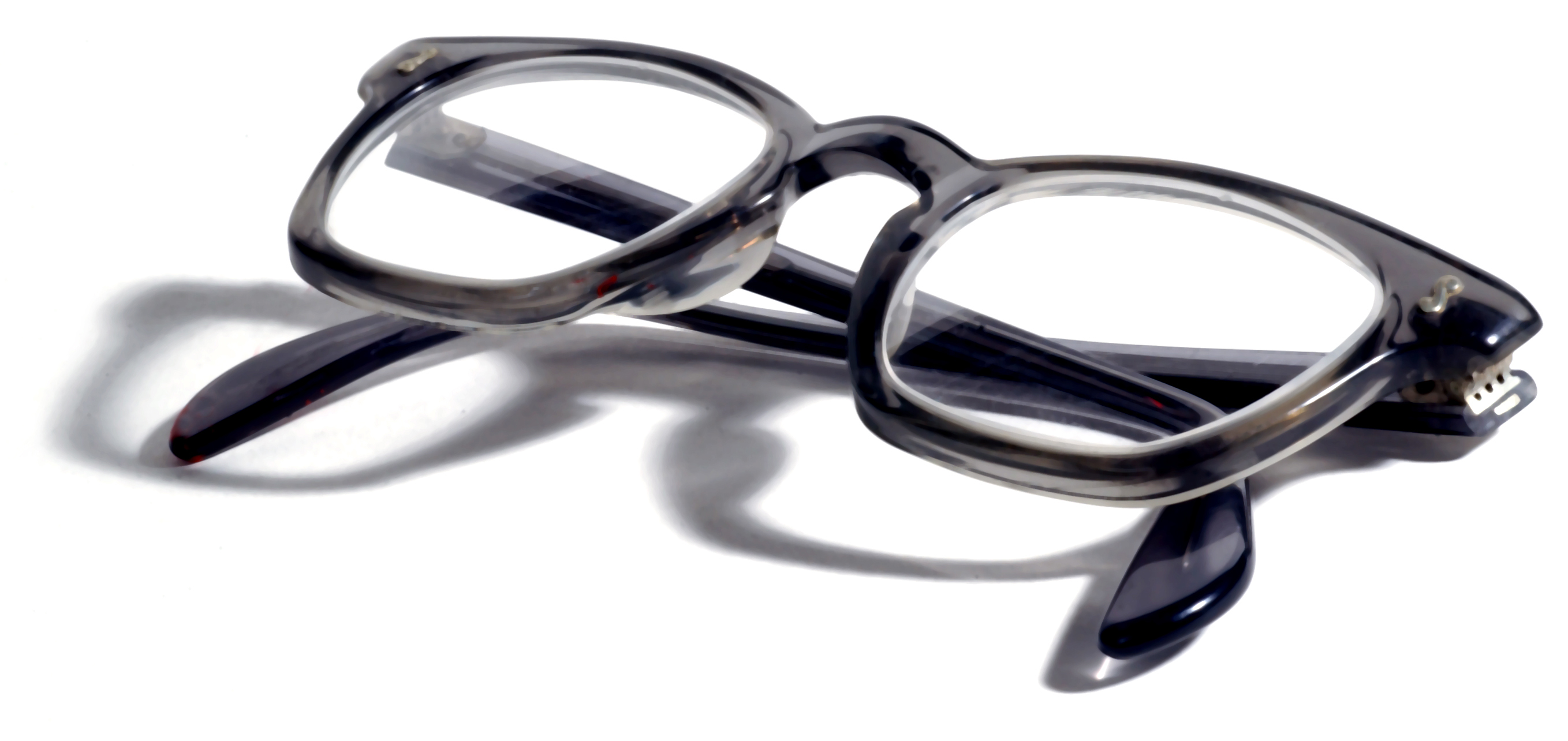
I have been nearsighted for most of my life. In fact, I can't even remember what it is like to wake up in the morning, open my eyes, and see anything in focus. Because of this condition, I wear glasses to correct my vision. In Forbearance: A Theological Ethic for a Disagreeable Church, James Calvin Davis writes about other kinds of myopia, ways in which our view of ourselves, others, and the world are out of focus.
Informational: Our brains and memories are limited. Our exposure to the world around is limited as well thus limiting our knowledge. Consequently "there is a limit to what any one person can know." But this isn't only just true for individuals. It "can also be true of communities especially monolithic ones."
Temporal: We live in a particular time and culture and are products of those temporal boundaries. Therefore, "we often fail to appreciate the effect that historical location (including our own) has on a person's understanding of the world." And especially this - "by judgmentally dismissing perspectives or uncritically adopting them, we betray an inability to appreciate temporal limits on those perspectives, or on our own."
Interpretational: This myopia is failing to recognize how we understand the information that we have. This includes the environment in which we were raised which directly affects our perspective. Also the sources of our information and their biases have a direct bearing as well. What we see as the "norm" may be the result of little or no exposure to a different or even opposing perspective when in reality it isn't the "norm" at all.
Interpersonal: The author says it best. "As often as we say to others, "I know what you mean," or "I can imagine what you're going through," the truth is that we cannot know exactly how someone else is thinking about an issue or situation, especially when their perspectives are shaped by capacities, experiences, and circumstances that are substantially different from our own." (italics mine)
Given this myopia, what is the answer? It's humility. We need to recognize that we don't know all there is to know and admit it. This should also temper how respond to those we disagree with.
"It should incline us to habitual self-criticism, as well as make us eager to test, refute, and enlarge our perspectives by hearing other voices, both around us and from different places and times. Humility ought to engender openness, listening, study, conversation and reflection."
But this isn't quick or easy. It requires an investment of time and effort and other virtues that the book will discuss next - hope and patience.
Forbearance: A Theological Ethic for a Disagreeable Church, James Calvin Davis, Eedrmans, 2017, pgs. 35-40.
Photo attribution: CSIRO [CC BY 3.0 (https://creativecommons.org/licenses/by/3.0)]
Comments
Post a Comment
Civil and pertinent comments are appreciated. Trolling will be deleted. Thanks.